Permits & Code
Barndominium Permits in Olmsted County: What You Need to Know
What it actually takes to permit a barndominium in Olmsted County, Minnesota — zoning, septic, design review, and the steps that catch first-time barndo builders by surprise.
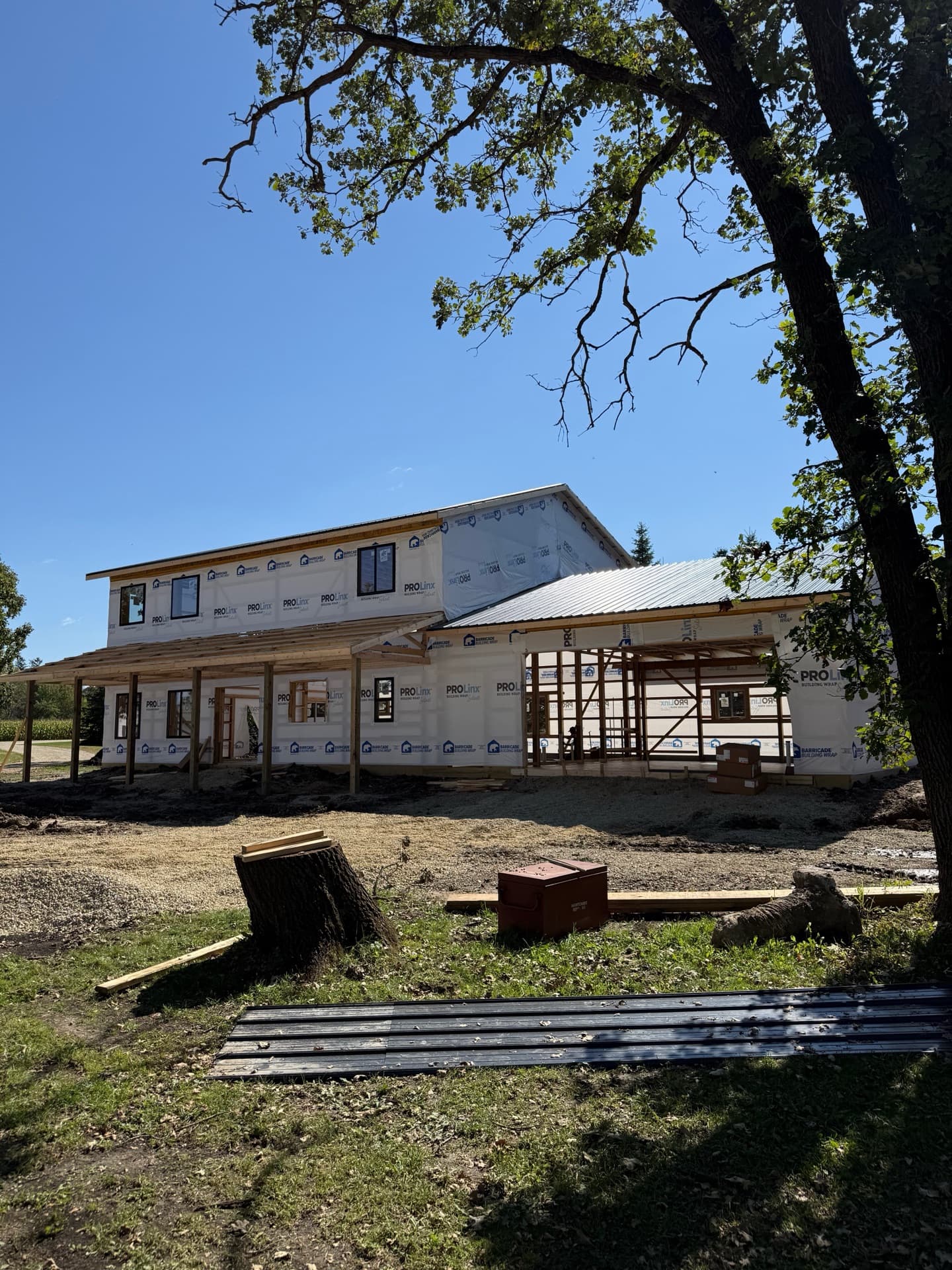
A barndominium — often shortened to barndo — is a residential structure built on a steel-frame post-frame system rather than conventional wood-frame construction. They're growing in popularity across Southeast Minnesota because the open spans, faster build, and lower cost per square foot all work well for families that want functional space without the conventional-house price tag.
The catch: because they sit at the intersection of agricultural building and residential building, the permitting path is slightly different than a conventional house. Here's what to know if you're considering a barndo build in Olmsted County in 2026.
Step 1 — Zoning verification
First question: is the lot zoned for residential use, and does that zoning permit the building type you're planning? Olmsted County has a mix of zoning districts including R-1 (Single-Family Residential), Rural Estate, Agricultural, and various Planned Unit Development districts.
A barndo built as a primary residence is typically permitted in residential districts as long as it meets the residential standards (minimum square footage, setbacks, exterior cladding requirements). Some HOAs and PUD covenants prohibit metal siding or roofing — verify this BEFORE signing on the lot, not after.
Step 2 — Septic + well feasibility (rural lots)
If the lot is on city sewer and water, skip to step 3. Most rural Olmsted County lots are not — which means septic system design and well feasibility are part of the permit process.
- Soil testing (perc test) by a licensed septic designer — typically $400–$800
- Septic system design submitted with the building permit — must meet Minnesota Pollution Control Agency Subsurface Sewage Treatment Standards
- Well location must meet setback requirements from the septic field (typically 100 ft minimum)
- Olmsted County Public Health reviews the septic design — typically 3–4 weeks
If the lot has thin soils or limited drainage, the septic system might require an at-grade or mound system instead of a conventional drainfield, which adds $8,000–$18,000 to the project. We do this evaluation BEFORE quoting the build so you know the realistic site cost up front.
Step 3 — Building permit submission
Olmsted County uses an online portal (Olmsted County Property Information). The submission package for a barndo includes:
- Stamped engineered drawings (foundation, frame, roof) — barndos require structural engineering because the post-frame system is span-engineered
- Floor plan with dimensions, room labels, square footage breakdown
- Site plan showing setbacks, well, septic, driveway, drainage
- Energy code compliance worksheet (Minnesota Energy Code is strict — barndos must meet R-49 ceiling, R-21 wall minimums)
- Septic design (if applicable)
- Owner contractor declaration or licensed builder information
Permit fees for a barndo residence in Olmsted County run roughly $1,500–$3,500 depending on square footage and valuation. Septic permits are separate, around $300–$500.
Review timeline: typically 2–4 weeks for a complete submission. Incomplete submissions can stall for months as comments come back and revisions go in. We submit a complete package the first time, which is the cheapest investment in the entire timeline.
Step 4 — Design considerations that affect permitting
Some design choices that are common in agricultural barndominium builds get flagged in residential review. Worth knowing:
Exterior cladding
Pure metal siding is permitted in most rural Olmsted zoning districts, but residential subdivisions often require a percentage of brick, stone, or fiber cement on the front-facing elevation. Check the deed restrictions early.
Window-to-wall ratio
Minnesota's energy code limits window-to-wall ratio to about 25% by default unless you upgrade to higher-performance windows or compensate with extra wall insulation. Barndos with floor-to-ceiling glass walls often need this analysis.
Insulation strategy
Post-frame buildings have wider stud bays than conventional construction, which gives more room for insulation but also requires careful detailing to avoid moisture problems. Closed-cell spray foam is the dominant choice in our barndo builds for this reason.
Step 5 — Inspections during construction
Standard inspection sequence for a barndominium in Olmsted County:
- Footing inspection (after excavation, before pour)
- Foundation/post inspection (before backfill)
- Framing inspection (after frame is up, before insulation)
- Insulation inspection (before drywall)
- Rough-in plumbing, electrical, mechanical (each scheduled separately)
- Final inspections (each trade plus final building) before Certificate of Occupancy
Typical scheduling window for an inspection in Olmsted County is 1–3 business days from request. We schedule inspections at the right phase boundaries so the project doesn't sit waiting.
Common surprises
- Driveway permit — separate from the building permit, required for any new driveway access onto a county or township road. Often forgotten until late.
- Stormwater management — for lots over 1 acre or in certain watersheds, you may need a stormwater management plan as part of the site plan submission.
- Address assignment — Olmsted County 911 assigns the address; this is a simple step but must happen before utility connections.
- HVAC sizing — large open spans of a barndo need careful HVAC zoning. We design for this rather than retrofit it.
Realistic timeline from idea to permit-in-hand
| Step | Typical duration |
|---|---|
| Site evaluation + soil testing | 2–3 weeks |
| Architectural + engineered drawings | 6–10 weeks |
| Septic design + Public Health review | 3–4 weeks |
| Building permit review | 2–4 weeks |
| Total pre-construction | 10–16 weeks |
Most clients are surprised that the pre-construction phase takes longer than they expected. The honest answer is: it's the cheapest place to invest time in the entire project. A complete, well-engineered permit submission means the build itself runs smoothly.
Have a project in mind?
Free coffee-shop consultation. Bring your rough plan and your honest budget — we'll tell you what's realistic.